
Hurricane Season is Here. Is Your Communications Plan Ready?
June 11, 2026
The deadliest natural disaster in modern Texas history didn’t care about the calendar.
It came, without warning, on the Fourth of July.
Last summer's flash floods devastated the Texas Hill Country, killing more than 100 people and destroying homes, businesses, and summer camps along the Guadalupe River. The Community Foundation of the Texas Hill Country — an organization with a staff of four — launched a relief fund within hours of the flooding. Within a week, it had raised $30 million. Within a month, more than $100 million.
It was one of the most remarkable disaster responses in the history of community philanthropy. And it happened because the foundation planned ahead.
While no organization can be fully ready to manage a crisis of this size and scale, the foundation’s experience highlights the power of planning.
Most foundations and nonprofits won't face a disaster of that magnitude. But many of you will be called upon this year to respond to something: a hurricane, a wildfire, a tornado, a public health emergency. And when that moment comes, the speed and clarity of your communications will shape whether your community sees you as a leader that takes action — or wonders where you were.
Here are some practical steps you can take right now, before anything happens, to ensure you're ready to communicate clearly and quickly when your community needs you most.
Build your disaster landing page now
This is one of the highest-value, lowest-cost steps you can take — and almost no one does it.
If your organization is likely to establish a relief fund or provide direct support in the wake of a disaster, build the website landing page now.
Create a template page with your branding, your giving infrastructure, and placeholder language that you can quickly customize with the specific details of the event. Include sections for how to donate, how to get help, what your organization is doing, and how to stay updated.
When disaster strikes, you should be able to fill in the specifics and make the page live within an hour — not scramble to build it from scratch while your phones are ringing and your community is looking for leadership.
Build partnerships before you need them
One of the most powerful lessons from the Hill Country response was the role that partner organizations played in helping a small team scale up to meet an enormous challenge.
Within days, Communities Foundation of Texas, San Antonio Area Foundation, and Austin Community Foundation deployed a multidisciplinary team to provide capacity in gift processing, finance, operations, governance, and grants management — the critical operational functions that can overwhelm a small organization when donations and demand surge simultaneously.
You can replicate this model by building mutual-aid agreements with peer organizations in other communities before disaster strikes. Identify foundations or nonprofits in neighboring regions that share your mission and would be willing to provide surge support — and offer the same in return. Define in advance what kinds of support you could provide each other: communications staffing, donation processing, volunteer coordination, media relations.
These partnerships turn what could be an isolated, under-resourced response into a coordinated effort backed by a network of experienced organizations. And they're far easier to establish when everyone is calm and thinking clearly than when a crisis is already underway.
Pre-draft your initial communications
In the first hours of a disaster, you'll need to communicate across multiple channels simultaneously — your website, email, social media, media inquiries, board members, and community partners.
You can pre-draft much of this. Create template language for an initial public statement that acknowledges the disaster, expresses your organization's commitment to the community, and directs people to your landing page. Draft a board communication that outlines what you're doing and what decisions need to be made. Write social media posts that can be adapted and deployed quickly. Plan for the possibility that some communications platforms — cellular networks, Wi-Fi, landlines — might not be accessible during a crisis.
The goal isn't to have perfect copy sitting in a folder. It's to have 80% of the work done so you can focus the remaining 20% on the details that matter — the specifics of what happened, what you're doing about it, and what your community needs to know right now.
Identify your spokespeople and prepare them
In a disaster, your CEO will almost certainly need to be your public face. But they may also be consumed by operational decisions, board communications, and community coordination.
Identify a backup spokesperson now — someone who can speak credibly to the media if your CEO is unavailable. Make sure both individuals have received media training and have access to your key messages and talking points.
It's also worth designating who will handle specific audiences. One person might manage media inquiries while another handles social media and a third communicates directly with community partners and government officials. Determine who will develop and approve key messages to avoid off-the-cuff remarks that could do more harm than good. These roles should be established and understood before the crisis, not improvised during it.
Plan for the long haul
Disaster communications don't end when the immediate crisis passes. In many ways, the hardest communications work begins in the weeks and months that follow — when public attention has moved on but your community's needs haven't.
Plan now for how you'll communicate through the recovery phase. How will you update donors on how their gifts are being used? How will you share stories of impact without exploiting the people you're serving? How will you maintain urgency when the national spotlight has shifted elsewhere?
The Community Foundation of the Texas Hill Country has continued to communicate consistently through nearly a year of recovery — announcing a $40 million housing fund, partnering with organizations to replace destroyed homes, and providing regular updates to the community. That sustained communications effort is a major reason it has maintained both public trust and donor engagement long after the initial surge of attention.
Don't wait for the storm
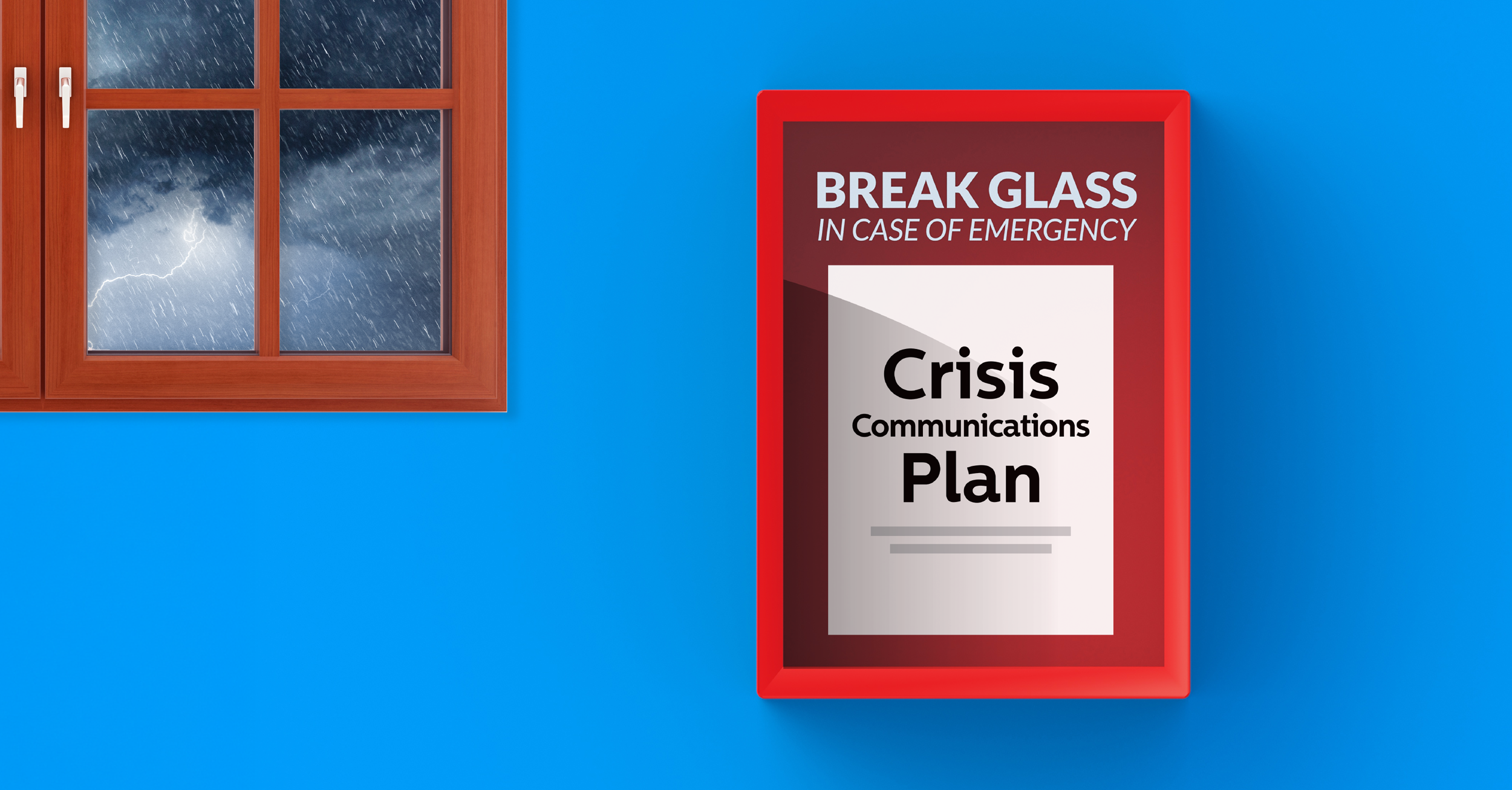
Our 2025 Communications Benchmarking Survey found that 42% of community foundations don't have crisis communications policies for natural disasters and 57% lack plans for social crises like mass shootings or public health emergencies. Those numbers are too high — and the consequences of being unprepared are too significant.
The organizations that respond most effectively to disasters are those that did the hard work of preparation long before the skies darkened. They built the landing pages, established the partnerships, drafted the templates, trained the spokespeople, and created the plans.
Hurricane season is here. Wildfire season is coming. And the next crisis your community faces may have nothing to do with weather at all.
The time to prepare is now.