The 6 Skills Every Social Good Communicator Will Need by 2027
March 19, 2026
The job you were hired to do is not the job you'll be doing a year from now.
That's not a threat or a hot take. It's a reality.
For communicators who are willing to evolve, it’s also an opportunity.
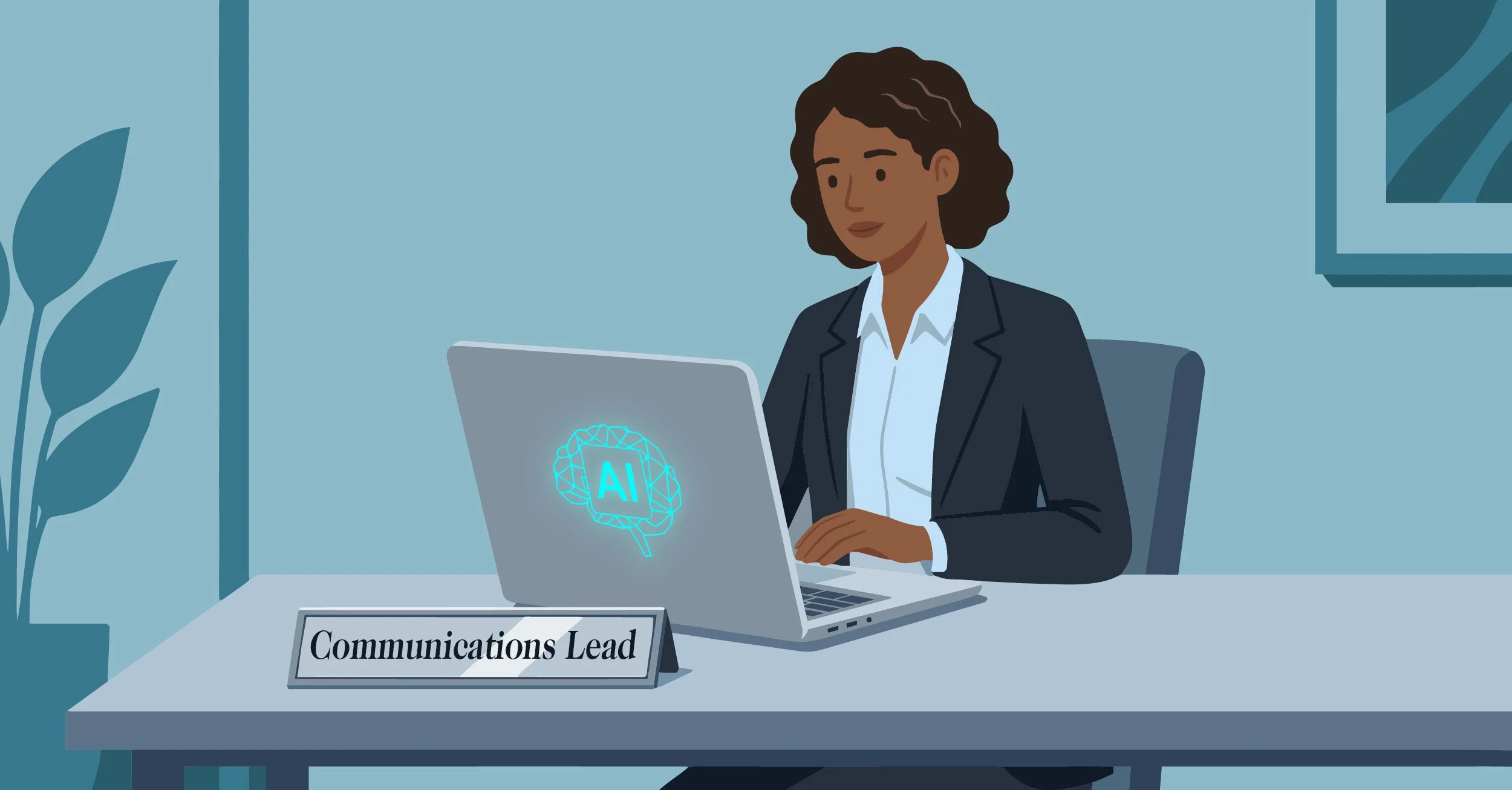
AI is rapidly reshaping how foundation and nonprofit communications teams operate. We’re seeing it every day in our work — and in how our clients are getting things done.
The tools are getting more powerful, the expectations are rising, and the role of the communicator is shifting from content producer to strategic leader.
Yet even as the tools become ever more powerful, your organization's success will rest on skilled communicators — people who can protect its voice, make sound judgment calls, add a human perspective, and connect your mission to your audiences.
You just need a different set of skills to do that well.
Whether you lead a communications team at a large foundation or wear all the hats at a smaller nonprofit, these are the six skills that will define your effectiveness — and your value — in the years ahead.
1. Strategic direction over content production
AI can produce a useful first draft of almost anything — a newsletter, a press release, a social media calendar, a donor acknowledgment letter. And it's getting better every month.
For writers, that’s a scary proposition.
But here's the upside — your skills will become more valuable if you pair them with strategic insight.
The communicators who thrive will be those who can develop and maintain a communications strategy that's tightly aligned with their organization's mission and strategic plan — and who can direct AI to execute in alignment with that strategy and with consistency and purpose.
Your job is shifting from maker to director. That's a promotion, not a demotion — but only if you invest in building your strategic muscles.
2. Voice protection
AI is remarkably good at producing content that sounds professional. It's far less effective at producing content that sounds like you.
Every foundation and nonprofit has a voice that's shaped by its history, its values, its community, and its people. When AI generates content without careful human stewardship, that voice gets diluted. Over time, your communications start to sound like everyone else's.
The communicators who will thrive are those who can define, codify, and fiercely protect their organization's voice — establishing clear guidelines for how AI is used and ensuring that every piece of content that goes out the door sounds authentically like your organization, not like a machine.
3. Quality judgment
AI doesn't know when it's wrong. You do.
As AI takes on more of the drafting and analysis workload, the communicator's role as quality arbiter becomes critical.
You need to be able to spot when AI-generated content misses the mark. Savvy communicators can spot when the tone is off, when the facts are shaky, or when a communication needs a human touch.
This requires more than just strong editing skills.
It requires deep knowledge of your organization, your audiences, and the broader landscape and context in which you operate. And it requires keen judgment to know when AI output is good enough to refine and when it needs to be scrapped entirely.
4. Prompt craft
The quality of what AI produces is directly tied to the quality of what you ask it to do.
Communicators who can write clear, detailed, context-rich prompts will get dramatically better results than those who type in vague requests and hope for the best.
Prompt craft is a communication skill — which means you're already better positioned to excel than most people in your organization. It requires the ability to articulate what you want, provide the right context, and iterate when the first result isn't quite right.
Invest time in getting better at this. It will multiply your capacity in ways that are hard to overstate.
5. Data literacy
AI tools can analyze audience engagement, segment your stakeholders, personalize content at scale, and surface patterns in how your communications are performing.
But those capabilities are only valuable if you know how to interpret what the data is telling you.
You don't need to become a data scientist to make sense of data.
However, you need to become comfortable using data to inform your strategy, make the case for your team's impact, and adapt your approach.
This skill also positions you to be a more credible voice in leadership conversations — where data-informed recommendations carry far more weight than gut instinct alone.
6. Knowing when to be human
Not everything should be touched by AI. The communicators who can draw the line clearly will be the ones their organizations trust most.
Crisis communications require human judgment. A condolence note to a grieving donor requires human empathy. A board presentation on a sensitive topic requires human nuance. A media interview requires a human voice.
As AI handles more of the routine work, your ability to show up as a human in the moments that matter most becomes your defining skill. It's what makes you irreplaceable.
These skills aren't just for communicators
While we've framed these skills through a communications lens, the truth is they apply across your organization.
Development officers, program staff, finance leaders — everyone who works with AI will need some version of strategic direction, quality judgment, and the wisdom to know when a human touch is required.
That means communicators who master these skills early are well positioned to help lead their organizations through the transition — reinforcing the case that communications belong at the center of your organization's strategy, not on the margins.
The tools are changing fast. The skills that matter most are the ones that keep you in the driver's seat.