
It's Time to Rethink Your Press Release Strategy
May 21, 2026
Press releases are dead. Or at least dying. That’s been the conventional wisdom in PR for the better part of a decade.
We've said it many times ourselves in this newsletter. Relationships matter more than releases. A well-framed pitch to the right journalist will always outperform a blanket announcement. The time you spend drafting a formal release could be better spent on more targeted, strategic outreach.
We still believe that. Relationships and surgical pitching remain the backbone of effective media strategy.
But something has changed — and it's significant enough that we think it's time to bring press releases back into the conversation.
AI has changed the equation
The single biggest reason to rethink your press release strategy has nothing to do with journalists. It’s all about AI.
When someone asks ChatGPT, Gemini, or Claude about your organization, those platforms construct their answers from the information they can find on the web. And press releases — especially those distributed through wire services like PR Newswire or BusinessWire — are among the most structured, indexable, and widely distributed content on the internet.
In our recent audit of how AI platforms describe 190 community foundations, we found organizations with even occasional wire distribution showed noticeably higher recency scores — meaning AI was more likely to serve up current, accurate information about their work. That's because wire-distributed releases get picked up and indexed across dozens of news sites, databases, and aggregators that AI platforms actively crawl.
A press release you send today isn't just reaching reporters. It's feeding the information ecosystem that is increasingly shaping how people discover and understand your organization.
Newsrooms are thinner than ever
There's a second shift that makes press releases even more relevant.
Local and hyperlocal newsrooms across the country are stretched to the breaking point. The newspaper industry has lost 75% of its jobs since 2005, according to the State of Local News 2025 report by Northwestern’s Medill Local News Initiative, and many newsrooms have lost half or more of their reporting staff over the past decade. The journalists who remain are covering more beats with less time and fewer resources.
The result? Many local outlets are now picking up press releases verbatim — or borrowing heavily from them in their coverage. A well-written release with a strong news hook, real quotes, and useful context is no longer just a starting point for a reporter's story. In many markets, it is the story.
This isn't a criticism of those newsrooms. They're doing the best they can with what they have. But it means the quality of your press release matters more than ever — because it may be the version of your news that reaches the public.
That media coverage, earned from well-crafted press releases, also makes its way into AI answers. Most AI citations (84%) come from earned media, according to Muck Rack’s What Is AI Reading? study.
Wire services deserve a second look
For years, we've steered many of our clients away from paid wire distribution unless there was a specific reason to pursue broad coverage. The cost can be significant, and for many announcements, a targeted pitch to the right outlets was a better use of resources.
That calculus has shifted. Wire distribution now carries added relevance because of AI search. When your release hits PR Newswire or BusinessWire, it doesn't just land in a journalist's inbox. It gets syndicated across a wide network of sites that AI platforms index, creating a durable digital footprint that improves how your organization shows up in AI-generated results for months or even years to come.
That doesn't mean you should put every announcement on the wire. But for your most significant news — major grants, leadership announcements, program launches, annual impact data — wire distribution is now a strategic investment in your long-term digital presence, not just a one-day media play.
The AI-era press release checklist
Let us be clear: this isn’t a license to blanket journalists’ inboxes with crappy press releases.
Every release you send to the media should be genuinely newsworthy. If it isn't, you're burning credibility with reporters who will remember the next time your name is attached to a pitch.
A strong release should include:
A clear news hook at the start that answers the question, "What is this about, and why does it matter now?"
Quotes that sound like an actual human said them — not the stilted, jargon-filled language that makes most foundation press releases sound interchangeable.
Enough context about the issue or announcement to make the release worth reading on its own terms.
Takeaways that matter to readers rather than just messages the organization wants to get out.
If you can't check those boxes, it's not ready to send.
You should also consider answer engine optimization (AEO) best practices that boost the chance of releases being cited in AI answers. These practices include using clear language, question/answer formats, FAQs, and authoritative sources with detailed citations.
Consider releases that never go to the media
Here's one more shift worth considering: you don’t need to send every press release to reporters.
Some of the most valuable releases you can create are ones that live exclusively on your website. A well-structured announcement posted to your newsroom or press page — with current leadership names, program details, and data about your grantmaking or the people you serve — acts as a findable, indexable resource for AI platforms even if no journalist ever reads it.
Think of these as public-facing records of your organization's work. They keep your website fresh, provide useful information for anyone who visits, and ensure AI platforms have access to current, accurate content about your organization.
This is especially valuable for announcements that are important to your stakeholders but may not clear the bar for media outreach — a new board chair, an updated strategic plan, a program milestone. These may not be mainstream news, but they are details that should be part of your digital footprint.
The press release, reimagined
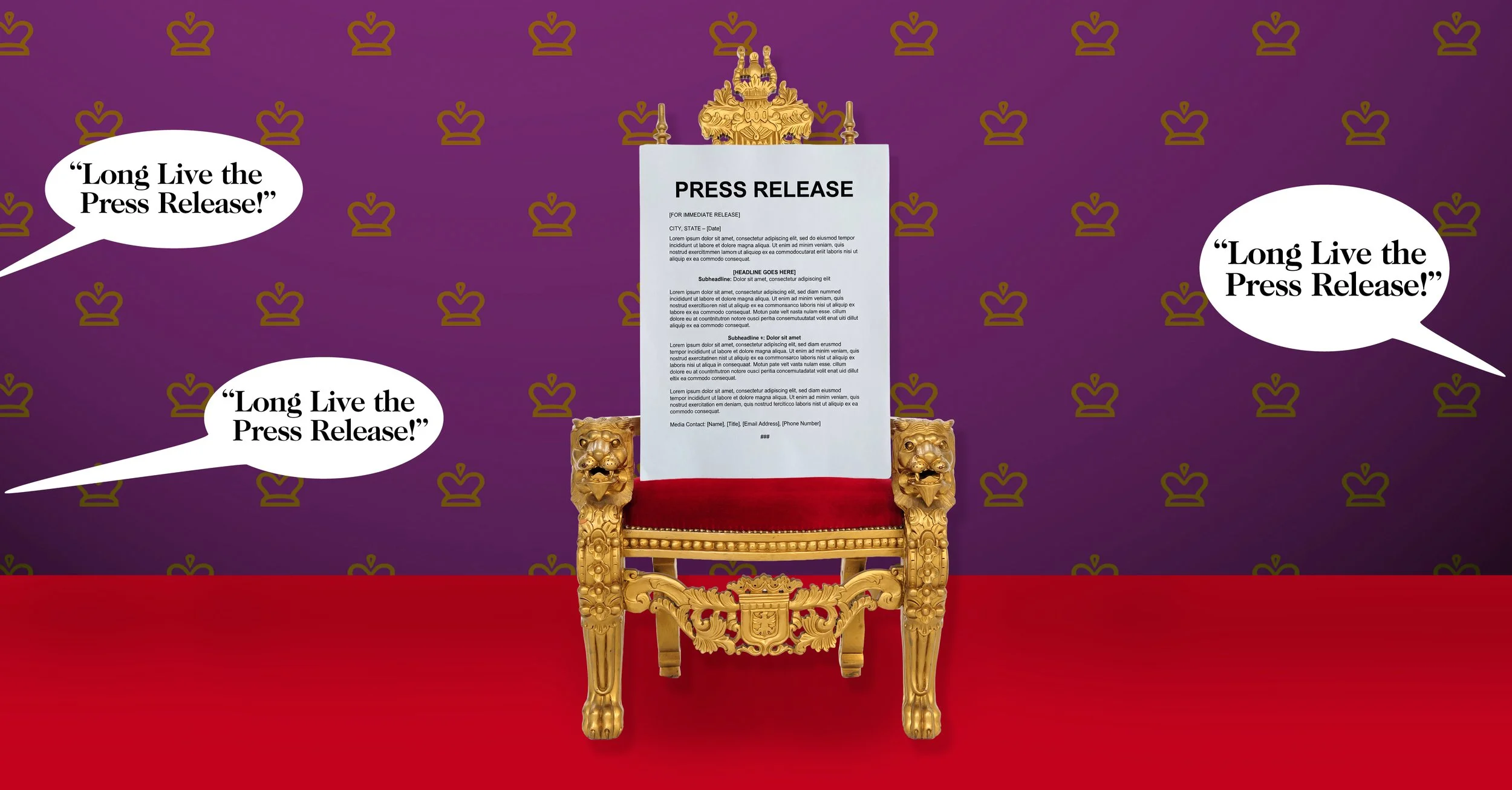
The press release isn't back because the old approach was right all along. It's back because the landscape has changed in ways that make well-crafted, strategically distributed announcements more valuable than they've been in years.
The key descriptor is "well-crafted." A mediocre release sent to a wire service is still a mediocre release.
The organizations that will benefit from this shift are those that treat every release as a piece of strategic communication — written with care, distributed with intention, and designed to serve multiple audiences at once: reporters, AI platforms, website visitors, and the public.
Relationships still matter most. Targeted pitching still wins. But the humble press release has earned its way back into your communications toolkit — and it's time to make room for it.
Get more practical insights to support your organization’s mission.