
December 11, 2025
Be a better reader.
That’s typically my first piece of advice on becoming a better writer.
Consistently reading articles and nonfiction and fiction books exposes you to different writing styles and techniques and increases your knowledge on a range of topics.
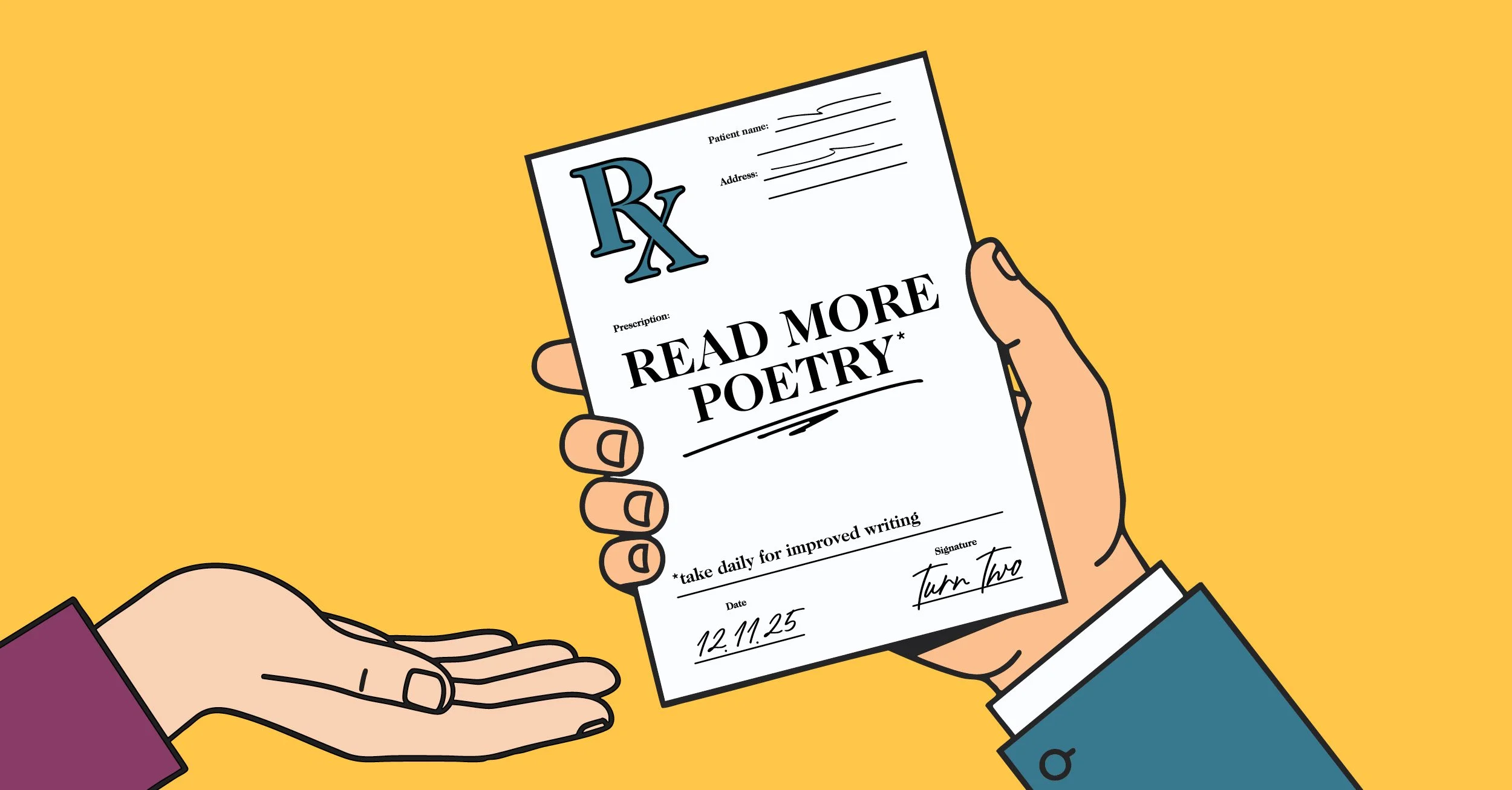
Yet an often-overlooked prescription for improving your writing is reading poetry. For starters, it’s far less time-consuming than plowing through “War and Peace” – or even your standard feature article. A poem or two a day can do the trick.
Here are some of the specific ways I think a steady poetry diet can improve both your perspective and skills as a writer.
Show don’t tell: If you’re looking for examples of lean writing that draws meaning from seemingly mundane moments, renowned short story writer and poet Raymond Carver’s work is hard to beat. In Happiness, he paints a vivid picture of two friends delivering newspapers and derives meaning from what he’s witnessed.
Gain perspective: It’s easy to get caught up in the frenzied pace and seemingly constant chaos of today’s world. Yet a bit of perspective can help ground us in knowing that often we’re dealing with different circumstances around the similar challenges faced by generations before us. The World is Too Much With Us helps affirm this point. Long before ubiquitous smart phones, William Wordsworth was lamenting humanity’s disconnect from nature due to materialism and consumerism.
Evoke emotion: The best stories combine learning and emotion. And it’s often emotion that moves people to action. James Wright’s A Blessing beautifully captures some simple moments rich with mood and feeling.
Deepen empathy: In a few stanzas, Maya Angelou’s well-known poem Caged Bird captures the painful reality of oppression in its many forms. Empathy and awareness of the plight of others is essential for writers to both find and tell stories that matter.
Restore hope: Hope for a better tomorrow is an essential for writers – particularly those of us working in the social good space, where at times it can feel pretty hopeless. Joyce Sutphen’s Crossroads can snap you out of a funk to approach a writing project with new perspective and focus.
Improve writing economy: A high school English class standard, William Carlos Williams’ The Red Wheelbarrow offers an unparalleled example of how a few well-crafted words can convey a lot of meaning. Always a great reminder in our world of shrinking attention spans.
The bottom line: A dose or two of poetry a day is good medicine for writers — with no negative side effects.